
2.3 Reading the physical place
Light, water, temperature and climate: the non-living conditions that decide what can grow on your land.
1. Key Abiotic Factors
Every organism on Earth is responding to the same set of physical and chemical conditions: air, water, temperature, light, soil, salinity, humidity, wind.
Read
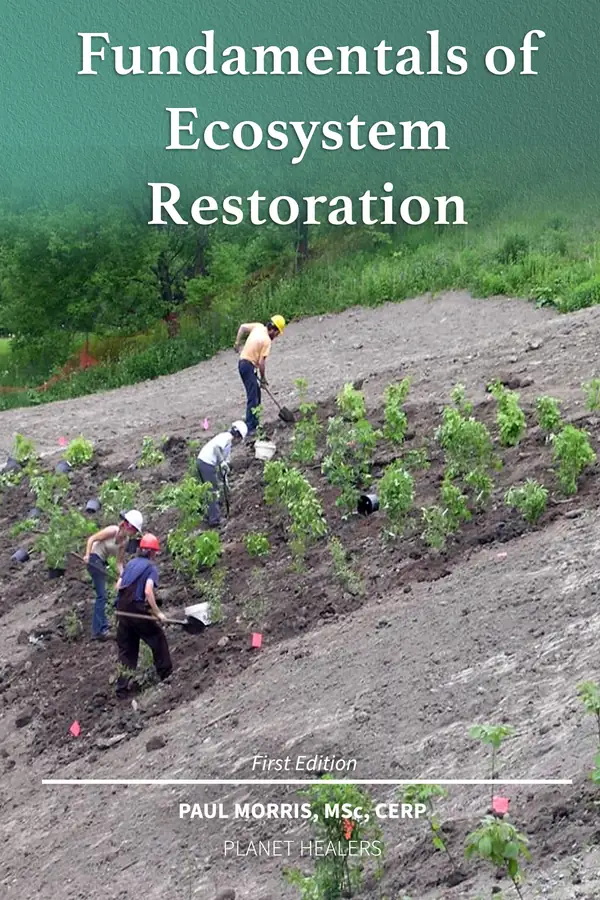
Fundamentals of Ecosystem Restoration: Ecology, Chapter 10
Watch
Video coming soon.
Do
In your journal: Pick a natural area near you. What are the dominant abiotic factors shaping what grows there?
2. Abiotic Factors in Aquatic Systems
Water has its own set of abiotic factors, and they operate differently from terrestrial ones.
Read
Fundamentals of Ecosystem Restoration: Ecology, Chapter 11
Watch
https://www.youtube.com/watch?v=8d2X8_wWCqc
Do
In your journal: Visit the nearest body of water. What can you tell about its health from simple observation: clarity, colour, odour, visible life?
3. Biomes
Biomes are the broadest categories of ecosystems on Earth, large-scale communities of plants and animals defined primarily by climate: temperature and precipitation.
Read
Fundamentals of Ecosystem Restoration: Ecology, Chapter 12
Watch
https://www.youtube.com/watch?v=GGdQ0Sqy-P8
Do
In your journal: What biome do you live in? What would the natural vegetation be if human activity were removed?