
3.5 Biochar
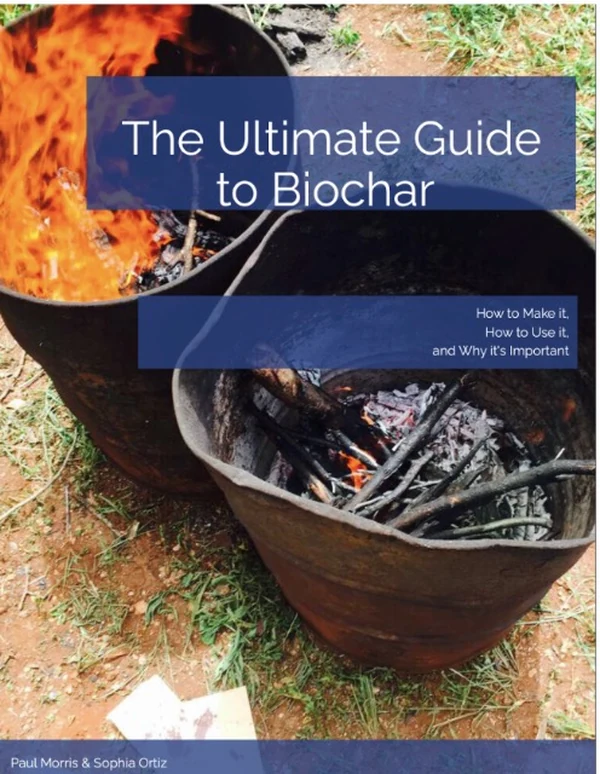
Make biochar, charge it, and put it to work in your soil. From The Ultimate Guide to Biochar, written with Sophia Ortiz.
1. What biochar is
Biochar is a stable, carbon-rich substance made by heating organic material in a low-oxygen environment. That process is called pyrolysis.
Read
The Ultimate Guide to Biochar, Chapter 1
Watch
https://www.youtube.com/watch?v=0_IdgPmnbRU
Do
List the organic waste your land or neighbourhood produces that could become biochar: prunings, husks, shells, woody weeds.
2. Make a small batch
One of the oldest methods involves digging a pit and burning biomass in layers with limited oxygen.
Read
The Ultimate Guide to Biochar, Chapter 4
Watch
https://www.youtube.com/watch?v=0_IdgPmnbRU
Do
Choose the small-scale method that suits what you have and make one small batch. Check local fire rules first, keep water on hand, and quench it completely.
3. Charge it
Freshly produced biochar is often called raw or inert. When applied directly to soil without nutrients, it can temporarily bind nutrients like nitrogen, leading to plant deficiencies.
Read
The Ultimate Guide to Biochar, Chapter 6
Watch
https://www.youtube.com/watch?v=hJXxhZNOJoE
Do
Charge your biochar before it goes in the ground: mix it into a compost pile at 5 to 15% by volume, or soak it in a nutrient liquid. Note what you used.
4. Put it to work
Sandy soils: add 10 to 20% biochar by volume to improve water and nutrient retention.
Read
The Ultimate Guide to Biochar, Chapter 7
Watch
Video coming soon.
Do
Match a recipe from the chapter to your soil, apply your charged biochar to one bed, and leave a bed beside it without biochar to compare.