
3.6 Seeds
Seed is where every planting starts: how it works, how to collect it with care, clean it and wake it up.
1. How seeds work
Seeds are the currency of restoration. Every native plant community you want to establish starts with getting the right seed, from the right source, at the right time.
Read
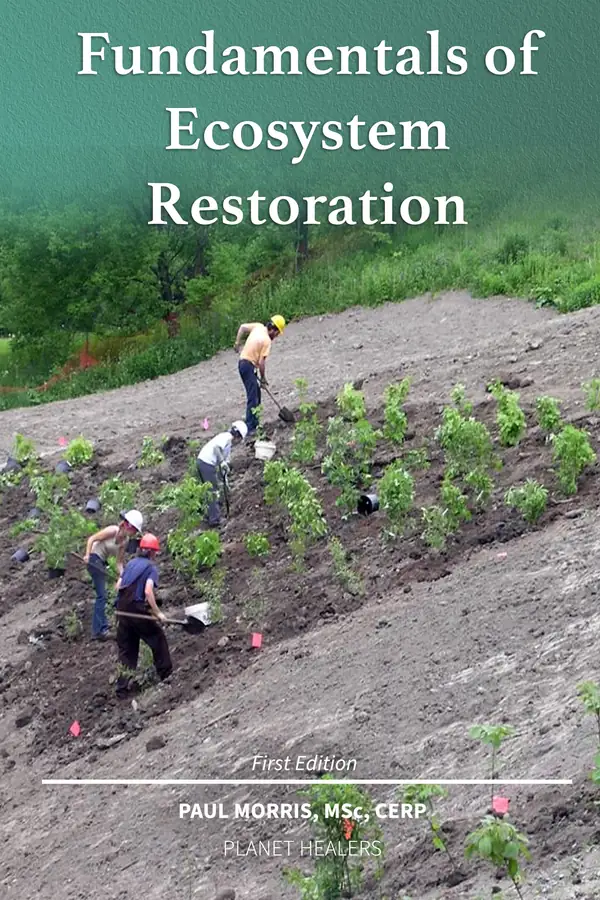
Fundamentals of Ecosystem Restoration: Practice, Chapter 63
Watch
Video coming soon.
Do
Pick three native species you want to grow. For each, find out whether its seed stores dry or must be sown fresh, and whether it needs cold stratification or scarification.
2. Collecting with care
Collecting seeds from trees and shrubs is one of the most rewarding parts of restoration work. It connects you to the land in a deeply personal way.
Read
Trees of Life, Chapter 3
Prairie Wild, Chapter 3
Watch
https://www.youtube.com/watch?v=rC4UGK2X6ks
Do
Collect seed from one local native plant. Take less than 10% of what's there, label it with species, date and place, and tell someone where you're going before you head out.
3. Cleaning seed
Wear a mask when cleaning seed, and goggles for fluffy seed.
Read
Propagation and Nursery Techniques
Watch
https://www.youtube.com/watch?v=0swMXAFOBi8
Do
Clean and dry the seed you collected. Turn it often while it dries, then label and store it.
4. Waking seeds up
Tree and shrub seeds from temperate climates are not designed to grow the moment they hit the ground. They are built for survival.
Read
Trees of Life, Chapter 4
Watch
https://www.youtube.com/watch?v=1DmEsaUb7sc
Do
Start one seed treatment from the chapter, such as cold-moist stratification or scarification. Write the date and when to check it.